
What Anime Gets Right and Wrong About Katana
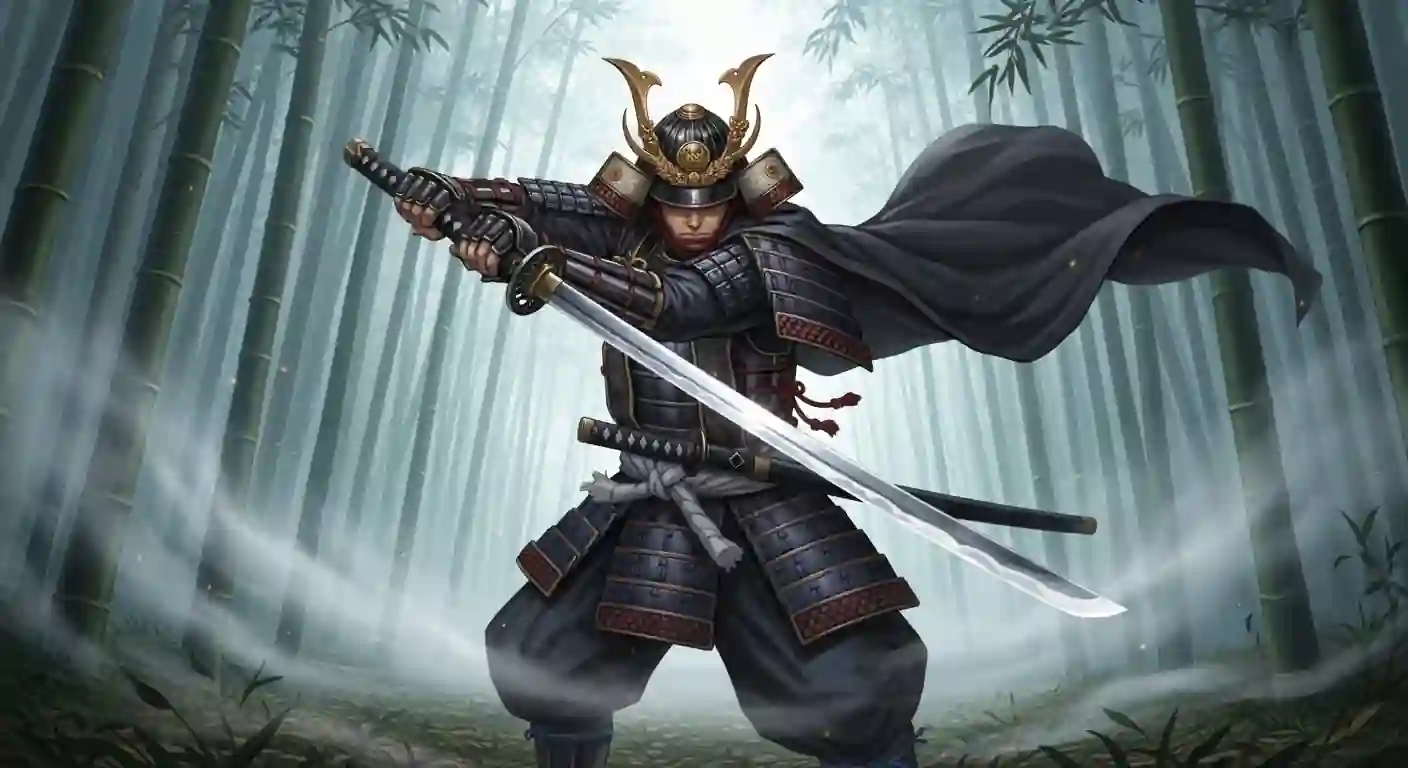
If you are into anime, you have seen hundreds of katana. Tanjiro’s Nichirin Blade changes color. Zoro carries three swords at once and cuts through buildings. Kenshin’s sakabato has the edge on the wrong side. These are some of the most memorable weapons in fiction, and they are all based, loosely or directly, on real Japanese sword design.
Anime sells the fantasy. Real swords are interesting in a completely different way. Here is what the shows get right, what they stretch past breaking point, and what a real katana actually does.
Why Anime Made the Katana Feel Supernatural
Anime needs drama, and the katana gives it a lot to work with. The draw-and-cut motion is already cinematic. A skilled swordsman can draw, cut, and resheathe in a single motion (called iaijutsu), and that speed translates perfectly to animation. Add some speed lines and a delayed reaction shot, and you have a scene that feels almost magical.
Then there is the emotional weight. In most anime, the sword is tied to the character’s identity. Zoro’s Wado Ichimonji carries his promise to a dead friend. Tanjiro’s blade color is tied to the wielder’s nature and compatibility. Kenshin’s reversed edge represents his vow not to kill. The katana is never just a prop. It is character development you can hold.
That is powerful storytelling. It is also why fans start looking up real swords after watching these shows. If you have ever browsed KatoKatana katana listings after finishing a Demon Slayer season, you are not alone. The jump from fiction to real steel is one of the most common entry points for new collectors.
Three Famous Anime Swords and Their Real-World Roots
Nichirin Blade (Demon Slayer)
In the anime, Nichirin Blades are forged from a special ore that absorbs sunlight, and they change color depending on the wielder’s nature. In reality, blade color does not change. But the idea has a real root: the hamon line. When a katana is differentially hardened with clay, the boundary between hard and soft steel catches light in a way that looks almost iridescent. Different quenching techniques produce different patterns, and experienced collectors use the hamon as one of several clues to identify a smith’s lineage.
The blade shape in Demon Slayer follows the standard uchigatana form, the most common katana type from the Muromachi period onward. The proportions, the curve, the tsuba guard: all track with real sword design.
Sakabato (Rurouni Kenshin)
Kenshin’s sakabato has the cutting edge on the spine side and the blunt side facing forward. The idea is that he can fight without killing. There is no historical record of a reversed-edge katana being used in combat. But the concept is rooted in real history: the Meiji government’s 1876 Sword Abolishment Edict (haitorei) banned carrying swords in public. Kenshin’s reversed blade is a fictional response to a real cultural shift, a swordsman who still carries a sword but has chosen not to use it as one.
The blade dimensions, the length, the tsuka wrap, the overall form, are all standard katana. Only the edge placement is fictional.
Wado Ichimonji (One Piece)
Zoro’s most important sword shares its name with Ichimonji, a real school of swordsmiths from Kamakura-era Bizen province (modern-day Okayama). The Ichimonji school was known for a distinctive hamon style called choji-midare, a clove-shaped pattern that smiths still study and replicate today.
A functional katana built in the traditional style would share many of the same design elements: the curvature, the single edge, the two-hand grip, the tsuba shape. The difference is that a real one weighs about 1 to 1.2 kg and cannot cut through a galleon.
Where Anime Nails It
Not everything is exaggeration. Anime gets a few things surprisingly close to reality:
- The draw matters. In real kenjutsu, the draw (battojutsu or iaijutsu) is a technique in itself. Anime’s obsession with the draw-cut is grounded in actual sword practice where the first cut from the scabbard can decide a fight.
- The sword reflects the wielder. Later Japanese sword culture and martial narratives often framed the blade as an extension of the swordsman’s character. That is not purely anime invention. The shows amplified something that was already there.
- Respect for the blade is real. When an anime character cleans, oils, or carefully sheathes their sword, that mirrors actual katana maintenance. Carbon steel rusts if neglected. Practitioners typically oil their blades after every use.
Where Anime Stretches the Truth
And here is where fiction takes over:
- Cutting power. A real katana is extremely sharp and effective against soft targets. It will not slice through stone, metal armor, or buildings. The blade would chip or break. Anime skips material science entirely.
- Durability. In anime, swords survive hundreds of clashes without damage. In reality, sword-on-sword contact damages both blades. Historical swordsmen used angles and deflections to avoid it.
- Weight and speed. Anime characters swing katana like they weigh nothing. A real katana is about 900 grams to 1.2 kilograms. That is light for a sword, but physics still applies. The speed you see in anime is pure animation magic.
Why Fans Outgrow Decorative Replicas
Most anime fans start with a display piece. Looks like the sword from the show, sits on a stand, costs maybe $30 to $80. For a while, that is enough.
Then you pick up a real one. The weight surprises you first. Then the balance. The handle fits differently because it is made from actual materials: ray skin and cotton wrap instead of plastic and glue. The edge has a geometry you can see and feel.
That shift is what turns a casual fan into someone who cares about steel type, heat treatment, and tang construction. It is about holding something built to work, not just to look like it works.
How to Judge a Katana Without the Anime Filter
If you are moving from anime appreciation to actual swords, here is a starting framework:
- Decide what you want it for. Display only? Light handling? Cutting practice? Each use needs a different build quality.
- Ignore dramatic labels. “Battle ready” and “combat grade” are not standards. They are marketing words. Look at specs instead: steel grade, tang type, heat treatment.
- Check the construction photos. If a seller only shows beauty shots and no tang, handle assembly, or blade cross-section, be cautious.
- Start with what you know. If your favorite anime sword is based on a standard katana form, start there. Learn one blade style well before branching out.
The shows got you interested. What you do with that interest is up to you.