Kodansha May Cancel the Mii-chan to Yamada-san Anime Following Backlash From Advocacy Groups

A potential anime adaptation of Mii-chan to Yamada-san is facing an uncertain future. Kodansha, the publisher behind the manga, is reportedly reconsidering the anime’s production after Japanese advocacy groups representing people with intellectual disabilities raised concerns about how the story portrays them.
The situation took another turn on October 30, 2026, when the publisher officially responded to one of the organizations that had raised objections to the adaptation. According to its response, Kodansha and the other members of the production committee are discussing whether the project should move forward. In other words, the anime could be canceled, although no final decision has been announced.
Why Is the Mii-chan to Yamada-san Anime Facing Backlash?
Mii-chan to Yamada-san is a manga by Nene Azuki that tells a rather dark story set in Kabukicho, Shinjuku’s famous entertainment district in Japan.

The story follows Mii-chan, a young woman who starts working at a hostess club, and Yamada, a more experienced employee who eventually takes on a protective and caring role toward the newcomer.
Mii-chan struggles with reading and understanding certain social situations. Her behavior also makes her a target for ridicule and exploitation by others. Although the character is never explicitly diagnosed with an intellectual disability in the story, her traits have drawn comparisons to people with mild intellectual disabilities or borderline intellectual functioning.
The organizations’ main concern is that certain aspects of the story could reinforce harmful stereotypes, particularly when it comes to vulnerability, sexual exploitation, and the way the protagonist is treated by other people.
Advocacy Groups Warn About Prejudice and the Exploitation of the Character
One of the most prominent objections came from Japan’s National Association of Families of People with Intellectual Disabilities, which published a document questioning the adaptation. The organization made it clear that it was not necessarily opposed to the manga becoming an anime, but wanted to know how the production intended to handle such sensitive subjects.

Among the concerns raised were:
- Stereotypes about intellectual disabilities: The possibility that the character could reinforce the idea that people with disabilities are inherently problematic or incapable of making their own decisions.
- Exploitation of vulnerability: The way the protagonist is subjected to violence, humiliation, and sexual exploitation.
- Using Mii-chan’s name as an insult: Reports that Japanese teenagers have already started using the character’s name to mock women with intellectual disabilities or different developmental characteristics.
- Official merchandise: Even promotional products have come under scrutiny, particularly acrylic keychains depicting Mii-chan crying and partially undressed.
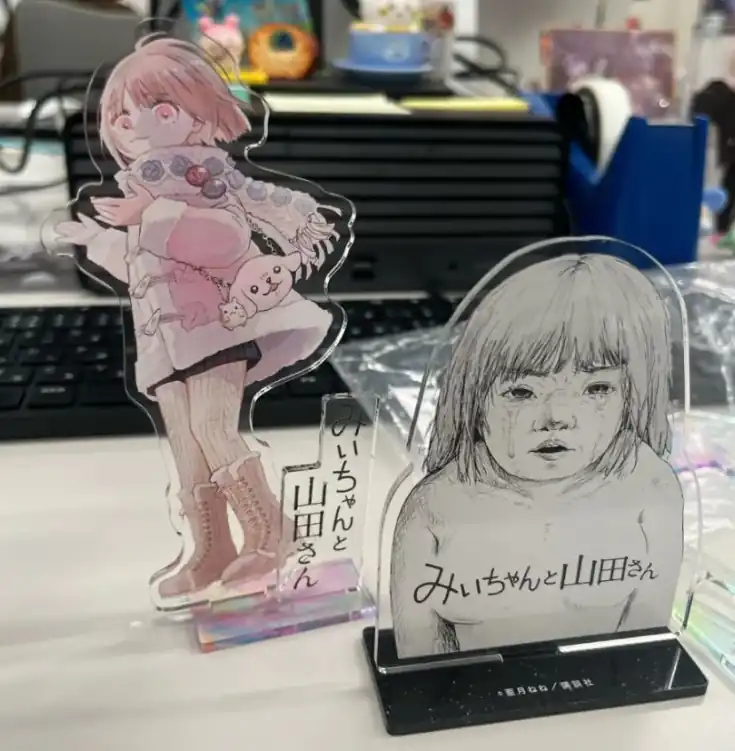
The criticism goes beyond the story itself. Organizations have also questioned whether turning the suffering of a character associated with intellectual disabilities into commercial merchandise is an appropriate way to promote the series.
Kodansha Changes Its Position and Starts Discussing the Anime’s Future
Initially, the controversy did not appear to pose an obstacle to the adaptation. On July 27, just one day after the anime was announced, the production committee released a statement saying there was no intention to discriminate against or look down on people with disabilities.
At the time, the team also said it intended to consult specialists and relevant organizations, as well as introduce appropriate content ratings and warnings to prevent misunderstandings.
However, the objections continued, and more organizations began voicing their concerns.
On October 5, the Association for the Protection of Vulnerable Children and Adults submitted a formal petition to Kodansha. The organization asked the publisher to take these concerns into consideration before moving forward with production.
In its response sent on October 30, the publisher stated that it would not proceed with the adaptation without first reviewing the documents and requests submitted by the organizations.
Kodansha also revealed that it is arranging discussions with other institutions, including representatives from support networks, mental health organizations, and psychiatric care facilities.
All I can think is… yikes.
via Automaton