
Why Are Manga Protagonists Always So Good-Looking? The Apothecary Diaries Author Explains

Have you ever noticed how manga and anime protagonists tend to be ridiculously good-looking, even when their appearance has absolutely nothing to do with the story? Well, there may be a very commercial reason behind this trend.
And it was Hyuga Natsu, the author of the light novel The Apothecary Diaries (Kusuriya no Hitorigoto), who offered a pretty straightforward explanation: if a protagonist isn’t attractive, the series could be rejected before it even gets started or eventually get canceled.
The Apothecary Diaries Author Explains Why Protagonists Need to Be Attractive
It all started when someone on X asked why so many heroes and protagonists in manga and light novels are drawn with such attractive faces.
Hyuga Natsu’s response was surprisingly candid. According to the author, characters who don’t fit that standard can run into trouble while their projects are still being pitched to publishers.
In other words, a story could be rejected during the proposal stage simply because of its character designs. And even if it gets approved, the author might be asked to change the characters’ appearances to make them more attractive.

Otherwise, the series could end up getting canceled.
Do Character Designs Influence Who Buys Manga?
But why would a publisher care so much about a character’s appearance?
One explanation shared by fans came from a book that discussed the children’s entertainment market.
According to the passage, there is an important difference between the person who consumes a product and the person who actually pays for it. When it comes to children, for example, parents are often the ones buying manga for them.
That means a publication needs to appeal not only to its younger audience but also to the adults who decide whether it’s worth spending money on.

This logic also helps explain why so many heroes in Japanese productions, including Tokusatsu shows, are played by actors considered attractive.
A character’s appearance becomes part of their commercial appeal. After all, a charismatic and visually appealing protagonist can catch someone’s attention before they even learn about their personality or story.
And this isn’t limited to manga. Toys, figures, posters, trading cards, and other merchandise can also benefit from the popularity of certain characters.
Even an Ugly Character Could Hurt a Manga From Its Very First Chapter
Another story shared during the discussion was even more interesting.
A fan brought up the case of a manga artist whose series was reportedly canceled while being published in Weekly Shonen Jump. The artist later moved to another magazine, where a new series eventually received an anime adaptation.
According to the account, one of the reasons given for the cancellation was rather unusual: the protagonist’s first enemy was ugly.
Someone also shared the example of the manga below, whose male protagonist was illustrated as handsome on the cover, despite starting the story as an overweight character (he eventually loses weight).
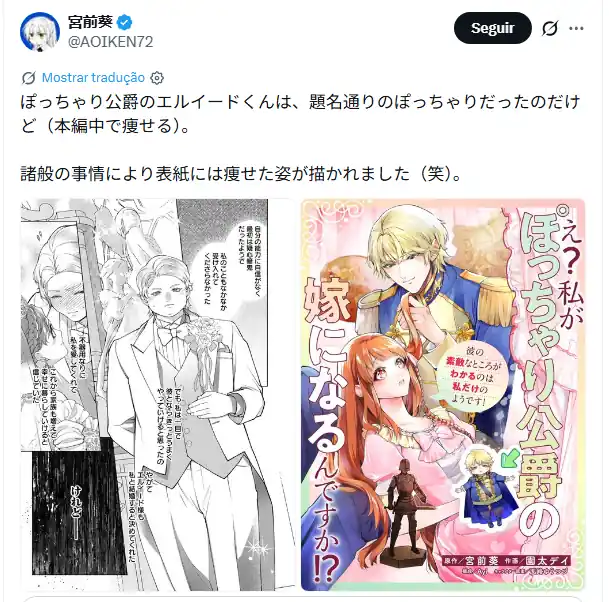
The explanation comes down to the importance of a manga’s first chapter. In a magazine where multiple series compete for readers’ attention, first impressions can make a huge difference.
If readers don’t like the characters’ designs or simply don’t feel interested enough to keep reading, they might drop the series almost immediately.
This is particularly concerning for magazines that rely on reader popularity polls and feedback to decide which series deserve to continue running.
Attractive Characters Also Sell More Merchandise
There’s one more detail worth mentioning: even though some people complain about the sheer number of attractive characters in manga, those characters continue to have strong commercial appeal.
This becomes especially clear in the merchandise market, where popular characters can receive countless products, including figures, keychains, acrylic stands, posters, and other collectibles.
That doesn’t mean ordinary-looking or conventionally unattractive characters can’t become popular. Japanese works are full of characters who have won fans over through their personalities, charisma, or unusual designs.
However, for publishers and companies that need to recoup their investments, betting on visually appealing character designs can be a safer commercial decision.