
Why Are There So Many Game Leaks from South Korea?

If you follow game leaks, you may have noticed that South Korea’s age rating system often leaks games that haven’t even been announced yet.
The phenomenon involves the Game Rating and Administration Committee, responsible for evaluating video games in the country. What many call a “leak” is actually the result of a legal requirement tied to the public disclosure of ratings after the review process is completed.
Why Are There So Many Game Leaks from South Korea?
The core issue behind game leaks from South Korea is not a security flaw or negligence by the agency, but rather local legislation. According to South Korea’s Game Industry Promotion Act, once a game review is completed, the rating must be made public.
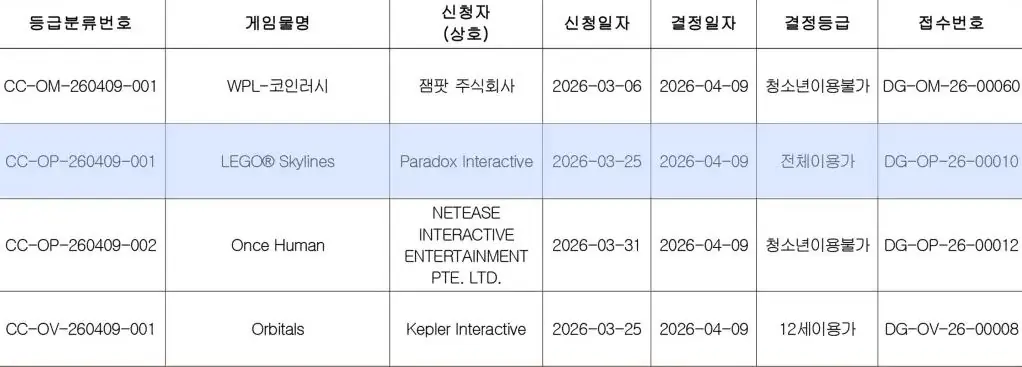
This means that even if a publisher requests confidentiality during the process, that protection only applies while the game is under review. Once the final decision is issued, publication on the official website becomes mandatory.
Because of this, we have already learned about several games that had not even been officially announced yet. For example, South Korea ended up rating a game called LEGO: Skylines, which has still not been officially revealed, but we now know it exists.
More recently, speculation has also emerged about possible re-releases of Call of Duty: Black Ops and Call of Duty: Black Ops II, fueled by listings found in the South Korean rating system.
It’s Not Exactly a Leak

Although the term “leak” is widely used, it is not technically correct. The agency itself is not improperly disclosing confidential information, but simply complying with a legal requirement under South Korean law.
The system’s transparency was designed to ensure public access to game ratings, but it has created a side effect: unplanned announcements of titles that have not yet been officially revealed.
Some companies see this system as a risk to their marketing strategies, since early reveals can disrupt planned announcements. On the other hand, experts argue that the issue is not with the rating body itself, but with the current legislation, which makes disclosure mandatory after review completion.
It is believed that one possible solution from game companies would be to delay releases in South Korea compared to other regions.
via Automaton