
How I Started Making Better Anime OCs by Fixing the One Thing I Used to Ignore
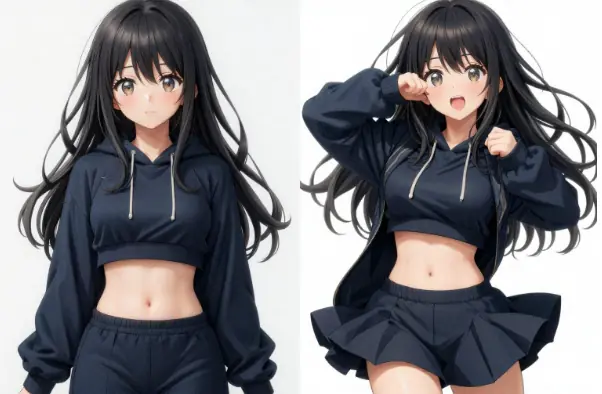
I used to think a strong anime OC came down to design alone.
If the hair looked good, the outfit felt on-theme, and the face matched the vibe I wanted, I assumed I was basically done. But after making and reviewing a lot of character concepts, I started noticing the same problem over and over again: some characters looked polished, yet they still felt flat.
That was the part I had been missing.
A character can have a great face, a solid color palette, and a clean design language, but if the presentation is weak, the whole concept loses impact. That shift in perspective changed how I build OCs now. I no longer treat character design and pose as separate things. I treat them as one combined decision.
When I began using an OC anime maker more intentionally, that became even clearer. It helped me move faster, but more importantly, it made it obvious when a character looked visually complete yet still lacked presence.
Why a “good-looking” OC can still feel forgettable
This is something I learned the hard way.
For a long time, I kept focusing on surface-level appeal:
- attractive eyes
- trendy hairstyles
- layered outfits
- strong anime styling
That can absolutely make an image look appealing. But it does not automatically make the character feel distinct.
What I noticed after testing more variations is that viewers read more than details. They read attitude. They read posture. They read whether the character looks grounded in a personality or just assembled from visual preferences.
That is why some OCs look memorable at a glance while others feel like they disappear the second you scroll past them.
What I changed in my own workflow
The biggest improvement came when I stopped trying to finalize everything in one pass.
Now I break the process into two stages:
- build a strong visual identity
- test how that identity is expressed through pose and body language
That sounds simple, but in practice it saves me a lot of wasted effort.
If I try to judge a character too early, I usually end up over-fixing details that were never the real issue. Sometimes the outfit is fine. Sometimes the face is fine. Sometimes the whole concept is fine. The real problem is that the character is standing in a way that tells me nothing.
How I build the base character first
When I start a new OC, I now focus on the core visual message first.
I usually define:
- the character’s overall mood
- the role they seem to play
- the balance between simplicity and signature details
For example, I might start with something like:
- calm but intimidating rival
- cheerful idol with chaotic energy
- elegant fantasy girl with restrained styling
From there, I lock in the visual foundation:
- hair shape
- outfit silhouette
- color direction
- facial expression
This is where having a fast character-generation workflow helps. I can compare rough directions quickly instead of mentally guessing what will work. That makes it much easier to see whether the OC has a real identity or just a collection of decent-looking parts.
The part I underestimated for too long: pose
This is where things started changing for me.
Once I began testing the same character in different poses, I realized how much body language affects everything. A pose can make the exact same OC feel:
- confident
- shy
- distant
- playful
- dramatic
- elegant
And that shift happens fast.
I have seen characters go from “pretty but generic” to genuinely interesting just because the stance finally matched the personality. The pose did not just decorate the design. It explained it.
That is why I now treat pose as part of characterization, not as a final cosmetic step.
How I use pose testing to strengthen an OC
When I want to see whether a character really works, I stop staring at the face and start testing posture.
Using an anime pose maker made this part much easier for me because it let me evaluate attitude instead of just appearance. I could test whether the same character felt more natural as:
- a composed front-facing figure
- a dynamic mid-action pose
- a relaxed casual stance
- a dramatic, high-presence silhouette
That matters more than most people think.
A lot of OC creators spend a long time refining design elements, but the moment they present the character in a generic pose, the design loses half its impact. I did that myself for a long time. Now I catch it much earlier.
The pose types I return to most often
I do not use random poses anymore. I usually test a few specific categories depending on the kind of character I am building.
| OC type | Pose direction that usually works best |
| Main character | open stance, forward energy, confident balance |
| Cool rival | restrained posture, sharp lines, controlled attitude |
| Idol / playful OC | lively motion, asymmetry, expressive hands |
| Elegant fantasy OC | graceful posture, longer lines, soft composure |
| Slice-of-life OC | natural stance, casual weight shift, low drama |
This step helps me make decisions that actually match the character concept instead of just picking whatever looks flashy.
What this changed in the final result
The difference is not just that the character looks “better.” The character reads faster.
That is the part I care about now. When someone sees the image, can they immediately sense who this character is supposed to be? Not the full story, obviously. But the energy, the role, the feeling.
Once I started building OCs this way, my concepts became:
- more readable
- more cohesive
- easier to refine
- easier to reuse in future visuals
And honestly, I wasted less time. I stopped over-editing details that were never going to fix the real issue.
My takeaway after doing this repeatedly
If I had to summarize what actually improved my OC work, it would be this: strong character creation is not just about designing a face people like. It is about making the whole character feel intentional.
For me, the winning workflow now is:
- define the concept clearly
- build a solid visual base
- test multiple pose directions
- refine the version that best matches the character’s personality
That approach feels much closer to how real character presentation works. It also produces results that feel more convincing, even before I get into finer polishing.
I still care about style, detail, and aesthetics. But I do not mistake those things for character presence anymore.
That was the real shift for me. Once I stopped treating pose like an afterthought, my OCs started feeling less like pretty images and more like actual characters.