
Hideaki Anno Says Anime Should Not Be Made for the Global Market

The director of Neon Genesis Evangelion commented on the international expansion of Japan’s entertainment industry. In a recent interview with Forbes Japan, Anno made it clear that he does not believe creating works with foreign audiences in mind is the ideal path for Japanese anime and cinema.
Hideaki Anno Says Anime Should Not Be Made for the Global Market
Japan’s content industry has been increasingly investing in global strategies, with government support and ambitious goals that estimate reaching a market size of 20 trillion yen by 2033. Even so, Anno states that, from a creative standpoint, little has changed inside studios.

When asked how this expansion affects the production of anime and films, Hideaki Anno explained that he has never consciously created works with an international audience in mind. According to him, his focus has always been on the Japanese audience.
The director stated that he can only create content aimed at the domestic market. Although producers often suggest thinking about overseas audiences, Anno made it clear that this is not his personal goal. For him, a work must first be well received in Japan. If it also happens to appeal to people abroad, that should be seen as a bonus.
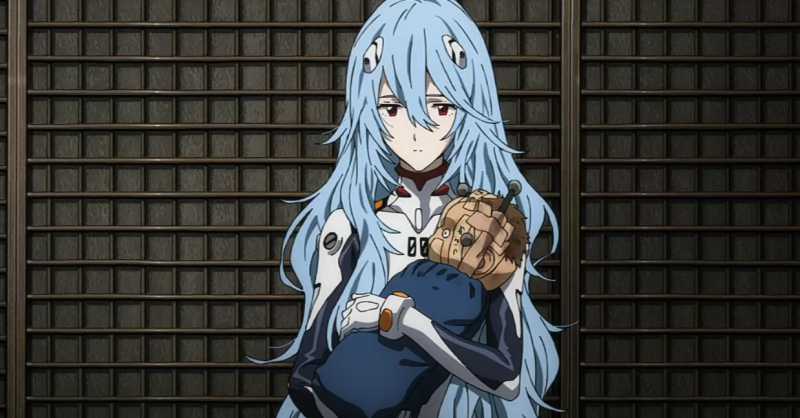
This stance became evident during the production of Evangelion: 3.0+1.0 Thrice Upon a Time. Anno revealed that he did not consider the international market at any point during the creative process.

One of the reasons that led Hideaki Anno to produce the film independently was creative freedom. According to him, working this way avoided external interference and allowed him to take full responsibility for the project, regardless of its financial performance.
This choice reinforces the Evangelion director’s view that artistic creation should not be shaped by market expectations, especially when those expectations come from outside Japan.
Another point raised by Hideaki Anno regarding the global market involves the language barrier. The director explained that works created through a Japanese way of thinking can only be fully understood in Japanese.
Even though cinema combines visual and sound elements, the dialogues, emotions, and conflicts of the characters are born from the Japanese language. This causes many nuances to be lost when the work is consumed by those who do not master the language or culture.
Even so, Anno acknowledges that these productions can be well received overseas, as long as the audience understands the intentions and subtleties of the original narrative. However, he reinforces that it is not the creator’s role to adapt the work to the audience.
In his own words, the audience is the one who must adapt.

When comparing films to video games, Hideaki Anno explained that cinema is a one-way medium. Unlike games, which allow interaction and constant adjustments, a film does not change based on immediate audience feedback.
Even if there are criticisms or complaints, that does not necessarily mean they reach the creators or should influence the content. For Anno, the audience must trust what creators consider interesting.
He cites Studio Ghibli and Hayao Miyazaki as examples of productions that remain focused on the domestic market, without directly worrying about overseas audiences.
For Hideaki Anno, international promotion should only happen after the work is finished. This part, according to him, should be handled by business professionals, responsible for turning the content into a product and selling it worldwide.
The director also commented that one of the reasons Japanese works took so long to gain ground in the West was Japan’s own difficulty in marketing them properly, rather than a lack of interest from foreign audiences.