
Editor Criticizes How Modern Anime Portrays Gyarus as Sweet Girls

Gyarus have been becoming increasingly popular in recent anime and manga, and in most cases they are portrayed as kind and sweet girls who enter the lives of otaku and end up becoming their girlfriends.
A great example of a cute gal winning everyone over is Marin from My Dress-Up Darling, but there are many others as well. However, not everyone is happy with this trend, and some even argue that gyarus should go back to being portrayed the way they are in real life.
Manga editor Mahiro made a post on his Twitter account criticizing exactly this trend. He said:
“I can usually ignore this kind of thing, but as a former gyaru magazine editor, I’m deeply tired of this recent ‘historical reinterpretation’ that treats gyarus as ‘intelligent, well-mannered, and always reasonable.’ Gyarus were people with problematic behavior, who didn’t mind committing minor offenses and continued being gyarus even when judged by society. I think this disrespects the core values that defined what gyarus truly were.”
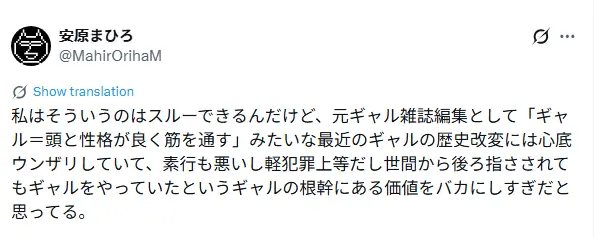
His tweet reached more than 3 million views and generated many reactions from Japanese users, with many people sharing his sentiment that anime and manga should stop portraying gyaru characters as something they are not.



Several comments shared personal experiences, saying that real-life gyarus were far from the sweet and welcoming image now seen in fiction. Many claimed that they were often associated with delinquent groups, problematic habits, and aggressive attitudes, reinforcing the idea that the current portrayal is a fantasy.
I have also frequently seen Japanese users on Twitter sharing encounters they had with gyarus on the streets, describing how they were often mocked or treated poorly by them.
When the term began gaining popularity, especially between the 1970s and 1990s, gyarus were seen as young women who challenged rules, ignored social judgment, and adopted behaviors considered problematic. This ranged from provocative attitudes to involvement in minor crimes and an openly defiant stance against the expectations imposed by Japanese society.