
Gachiakuta Author Denies Rumors Claiming She Is Non-Binary
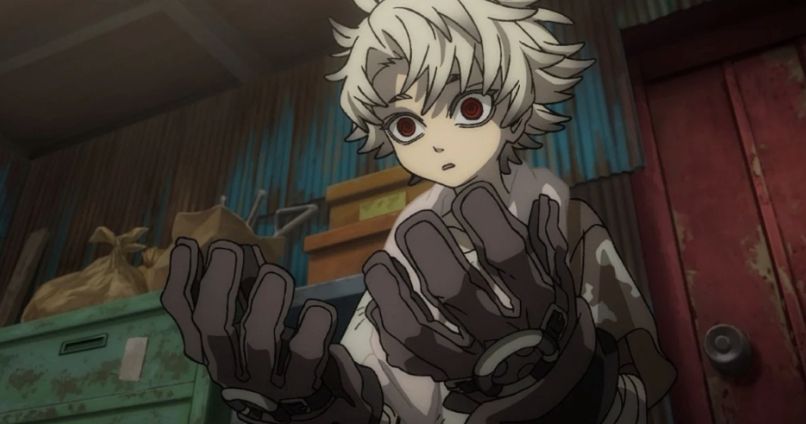
Let’s talk once again about Gachiakuta, because this time the author herself had to publicly deny yet another lie that some “fans” like to make up about her: the claim that she is non-binary.
In an Instagram story, Kei Urana posted the following message:
“Internet: Urana is non-binary!
Me: Really?”
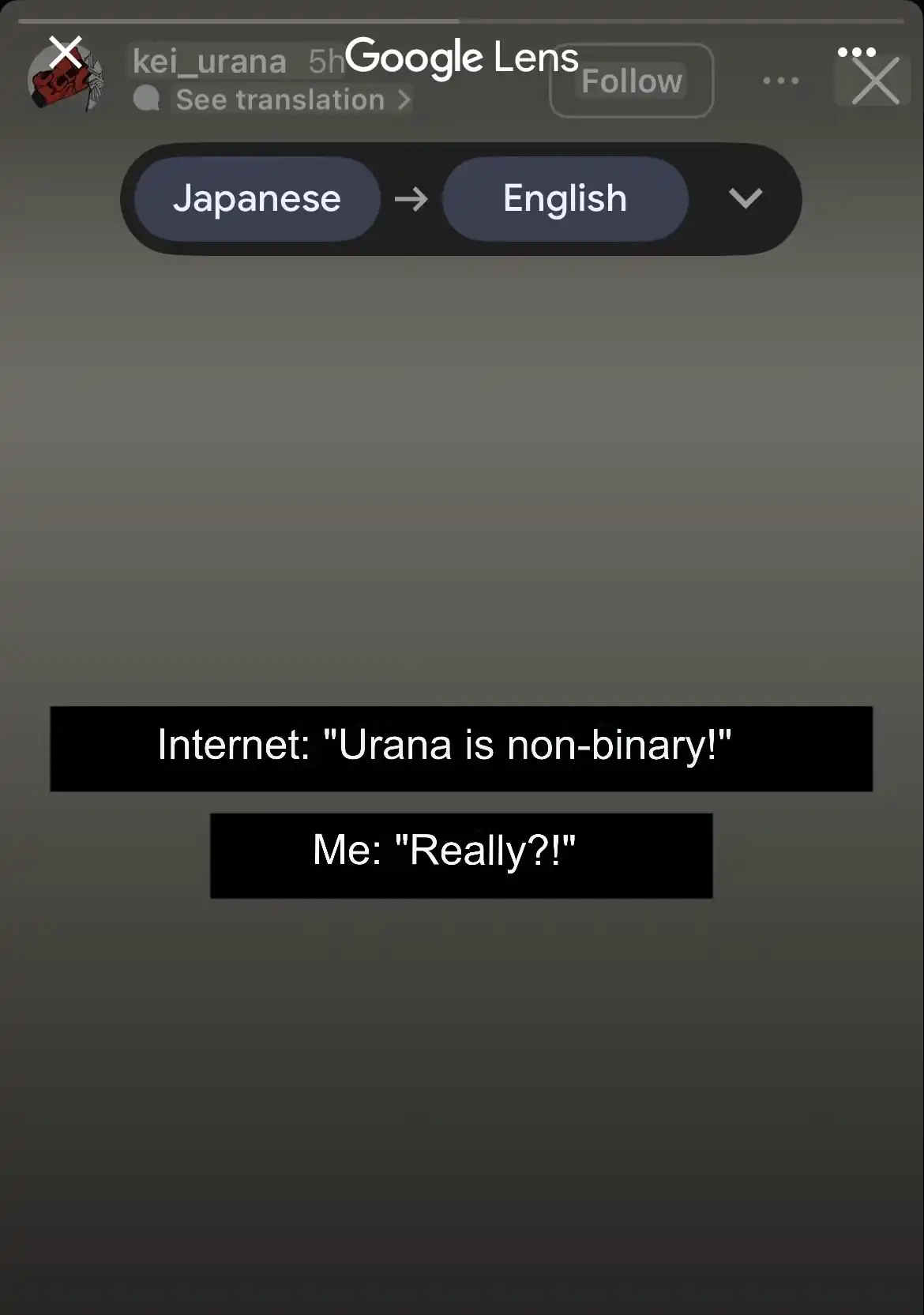
This came shortly after she confirmed that one of her characters, whom some people believed to be trans, is not. In fact, a tweet went viral after Kei Urana denied being non-binary:
“These people celebrating don’t even know that Kei Urana is non-binary and that the anime is very queer.”
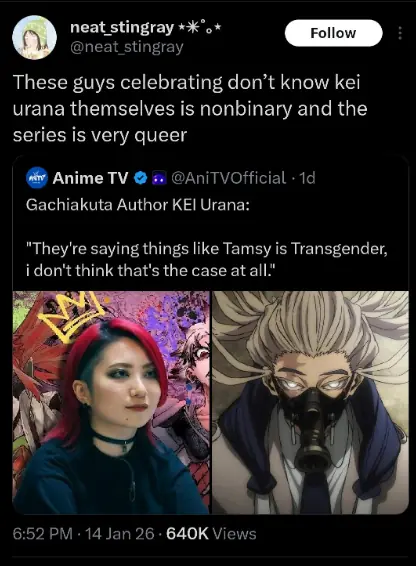
But where did this confusion about Kei Urana being non-binary come from? It traces back to a post by Manga Mogura in 2023. What happened was the following.
Kei Urana asked to be referred to using gender-neutral pronouns, since the Japanese language allows for that. However, French does not have gender-neutral pronouns, so the publisher initially used masculine pronouns to refer to her, but later decided to switch to feminine pronouns.
Because of this request, many people assumed it was a confession that she is non-binary.
But that is not the case. The truth is that many Japanese authors simply want to remain anonymous on the internet, and that includes not revealing whether they are male or female. In most cases, it has absolutely nothing to do with being non-binary, but rather with preserving anonymity.
For example, the author of Kimetsu no Yaiba has never officially confirmed their gender. What exists is mostly speculation, but the reality is that Gotouge wants to remain completely anonymous.
However, in 2024, Kei Urana decided to reveal herself, and a photo of her was published for the first time, showing that she is a woman. Since then, she has appeared publicly on several occasions.
Ideally, people should stop theorizing and making definitive claims until the person in question chooses to speak for themselves.