
Taiwanese Media Blames Mushoku Tensei for Subway Attack
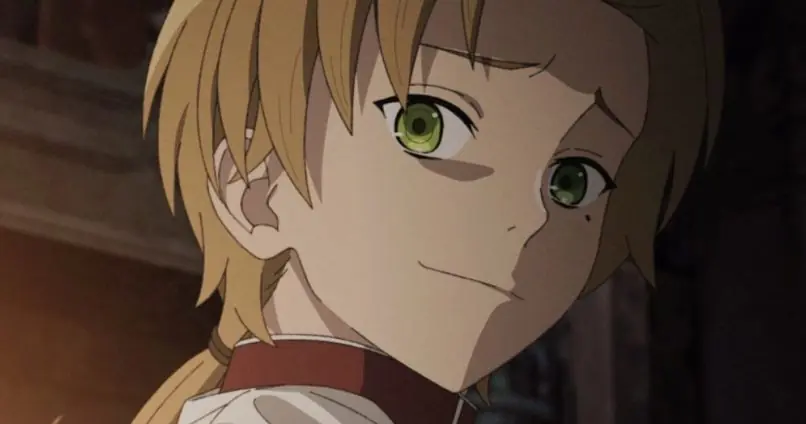
Traditional media has done it again, taking a crime committed by a single person and deciding to blame an anime for it. For those who are not aware of what recently happened in Taiwan, they are referring to a so-called “terrorist attack” carried out by just one man.
According to authorities, a 27-year-old man began a violent rampage at Taipei’s main metro station, where he threw smoke bombs and Molotov cocktails, causing panic among passengers.
The attacker then ran through busy streets and an underground shopping area, stabbing people along the way. After traveling about 800 meters, he reached Zhongshan Station, an area known for shops and restaurants, where he once again set off smoke devices and attacked civilians with a knife.

After briefly stopping at a hotel to pick up another item, the attacker entered a bookstore and a nearby department store. Surrounded by police, he eventually fell from a multi-storey building and died shortly after being taken to hospital. Authorities confirmed that the suspect, identified as Chang Wen, had a criminal record and was wanted by police.
Taiwanese Media Blames Mushoku Tensei for Subway Attack

After details of the attack were released, Taiwanese media outlets began analyzing Chang Wen’s personal profile in an attempt to understand his psychological state. Reports highlighted that he lived an isolated life, with few social connections, and was often described as a lone wolf-type attacker.
During the investigation, police examined the suspect’s electronic devices and identified his entertainment consumption habits. Among them, particular attention was drawn to his interest in anime and games set in fantasy worlds, especially Mushoku Tensei: Jobless Reincarnation, a Japanese work well known within the isekai genre.
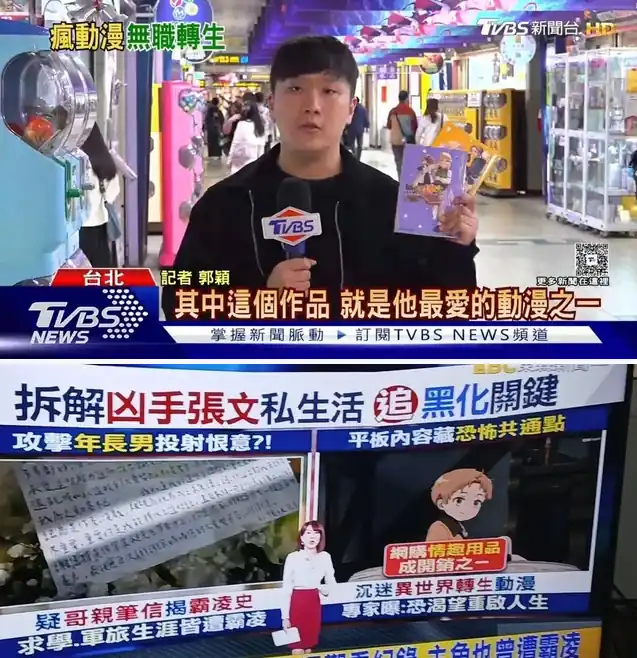
According to local media, Chang Wen showed a strong affinity for stories that deal with new beginnings, escapism from reality, and rebuilding one’s life in alternate worlds. In addition to the anime, he also played a mobile RPG with a similar theme.
“Experts” interviewed by Taiwanese broadcasters and news portals emphasized that Mushoku Tensei: Jobless Reincarnation does not contain explicit violence and is considered relatively moderate within the genre. The work focuses on the emotional development of the protagonist, who tries to overcome past failures after being reborn in a magical world.
Psychologists pointed out that individuals experiencing extreme isolation may project their emotions and frustrations onto fictional works that offer emotional identification. In this sense, anime and games can function as a form of psychological support or escapism, without necessarily representing a direct influence on violent acts.
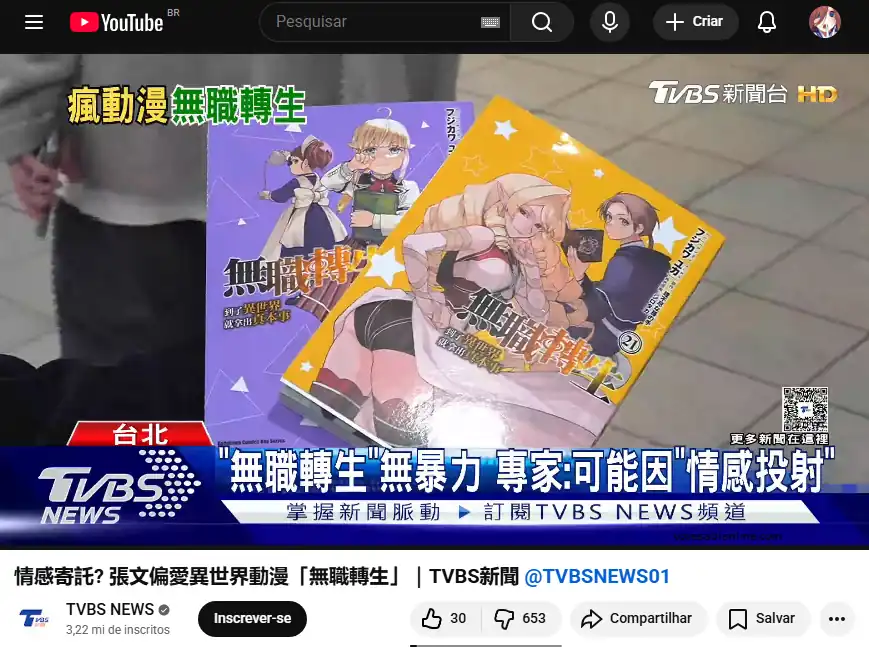
Taiwanese broadcaster TVBS News aired a report stating that criminal Chang Wen liked Mushoku Tensei: Jobless Reincarnation, which drew heavy criticism from anime fans who viewed the association as “fake news.” As shown in the screenshot above, the video received a large number of dislikes.
On Twitter, some reactions called for the broadcaster to be sued, arguing that the report was biased for attempting to link such a brutal crime to an anime like Mushoku Tensei: Jobless Reincarnation.
Below are reactions from the Japanese public:
- Is it the fault of works created in Japan now?
- If someone in Japan said “it’s anime’s fault,” they’d get beaten up nowadays.
- This kind of reporting shouldn’t exist in Japan anymore, but Taiwan seems fine with it, huh.
- If you’re going to reincarnate, you have to get hit by a truck, otherwise it doesn’t count.
- Then reincarnate alone, man.
- He probably watches movies and porn too, but reincarnation gets singled out as the scapegoat, it’s laughable.
- Didn’t someone in Taiwan recently help another person following the spirit of “Himmel would do that”?
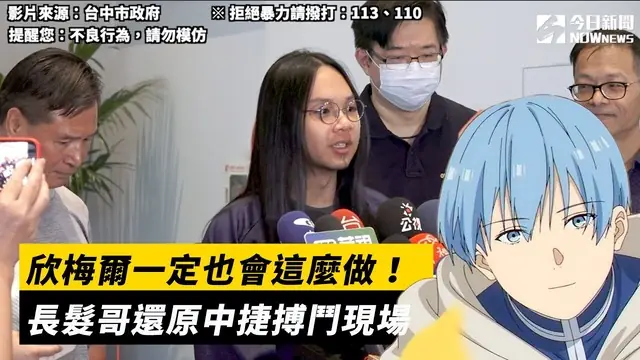
Yes, this is a real case. In 2024, a man influenced by Himmel from Frieren stopped another man who tried to stab people. When asked what motivated him, he said, “Himmel would definitely do the same.”
- There was something similar in Akihabara in Japan too, right?
- Narou-type stories are basically factories for future criminals.
- The idea of dying, reincarnating, and going to paradise is pretty extreme.
- There’s an author signing event in Taiwan in February, but at this rate, it might be better to cancel it before an attack happens.
- Liking isekai, being unemployed, committing a crime and then killing yourself… that’s heavy. It could end up being censored.
- Someone who truly believes in reincarnation wouldn’t take such a self-destructive action. This guy clearly knew how to separate anime from reality.
- They really went with the most problematic type of otaku, huh.
So now we’re supposed to think that fans of Mushoku Tensei are criminals?